... with the Canon 70D plus 17-85mm macro lens in hand to see what was about on a (relatively) warm, sunny afternoon.
Peeling bark on the old leylandii stump
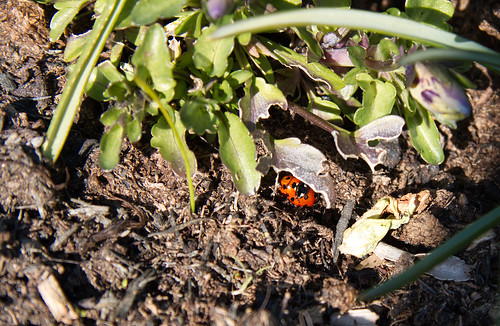
A pair of amorous ladybirds who throught they were hidden from prying eyes
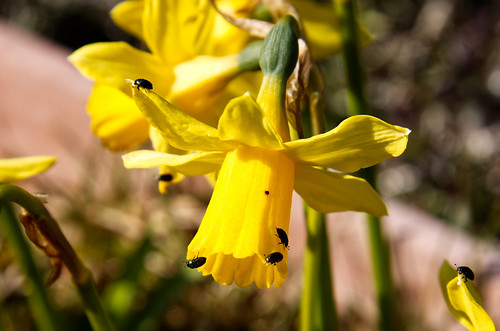
Lots of tiny pollen beetles, especially on the tête-a-tete.
A pretty pink Dianthus
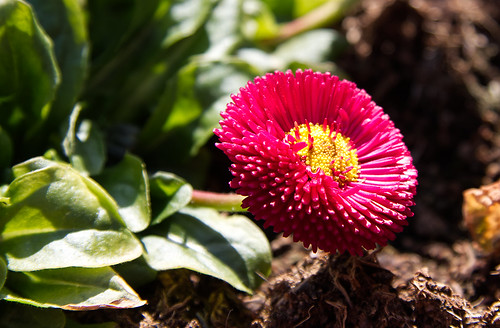
A button daisy
Finally a rather tatty Peacock Butterfly on the Heather
It was lovely to get out in the fresh air without having to wrap up like an Inuit.
As so often happens the thing I went out to photograph eluded me.
I had spotted a Bee-fly hovering several times but it was camera shy.
In his comment yesterday Adrian (Adrian's Images) wondered how much it would be possible to crop the video clips from yesterday. I experimenting with what is know as a Ken Burns zoom in iMovie (where you set start and end sizes of crop and the software slowly moves from one to the other) on two of the clips. It worked better on the first one where the lens was just set to zoom as there is a better depth of field. The result: (no music this time)
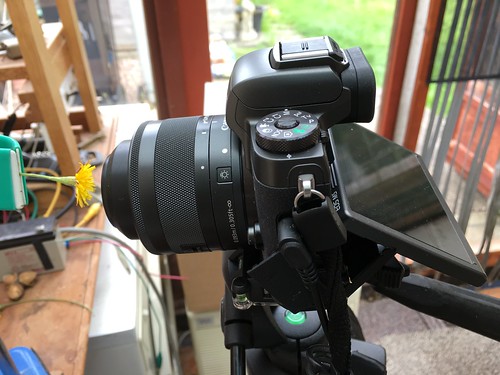
OK. So I spent a bit more on the new set up. I found a mint condition used EF-M 28mm macro lens that I had my eye on. Lets me get within about an inch of a subject and has LED lighting built in round the front lens. No extra batteries needed as they take the power from the camera battery.
The LEDs are not over bright. Good enough when that close to a subject to add some illumination to darker areas of the subject. Switchable at two light intensities. Choice of left, right or both on.
I had looked round for something to test it on and found some flowers which had pollen beetles. It took three attempts. Just as I had the first fixed in place the beetle flew away. On the second attempt the beetle dropped off. It was a case of third time lucky.
After a few still photo takes I though it would be more interesting to make a video. One great facility when shooting video is the ability to use the touch screen and change the area for the lens to focus on. Either tap a new place or drag the focal area box to a new position for a smooth change in focus.
Enough ramble - on to the video. (No tweaking, exactly as taken at 1080p HD)
1st clip with the lens set to macro, the others with the setting on 'super macro'
As promised a few days ago here is some video of the Pollen Beetles at work.
They sure do love their pollen:
The soundtrack is 'Hunger After Dinner' from a ProTracker module by Delta X of fraxion.
Sometimes there are darn near fifty Starlings in the trees around my garden. The only feeders they can use are the wire baskets containing a mixture of peanuts and suet pellets. Naturally the pellets disappear first but the birds have to work for them by clinging on the outside and pecking off small pieces. To my astonishment one of this years brood had other ideas. It must have found out by accident that the lid can be lifted to gain access to the inside. As far as I can tell only one bird regularly does this and even though the others can see it they don't seem to have tried copying:
I was worried that it might lose its footing and fall in head first and get stuck. Sorry the end of the video goes out of focus. I forgot that it is better for this sort of video to use manual focus.
Have a great weekend observing the antics of the wildlife around you.
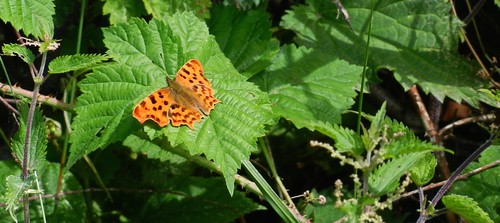
On one of our walks down the lane something bright orange stood out amongst all the greenery:
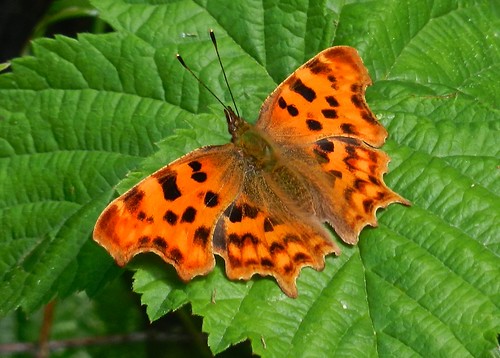
For once it didn't fly away as I gradually crept closer to get a better shot:
A pristine Comma Butterfly.
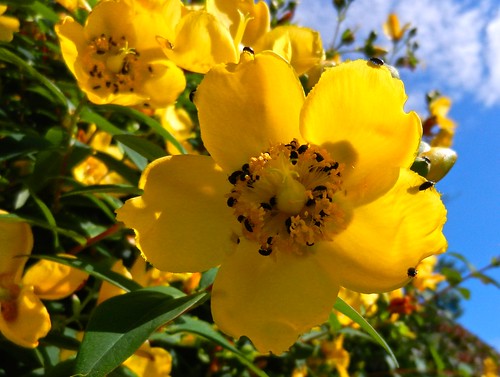
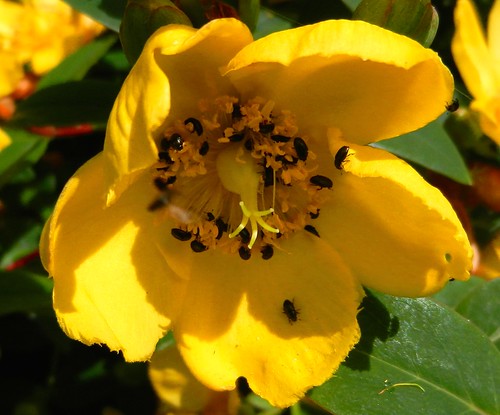
On our way back home as we passed one large bush covered in bright yellow flowers I could see it was surrounded by hundreds of tiny black insects flying around and covering many of the flowers:
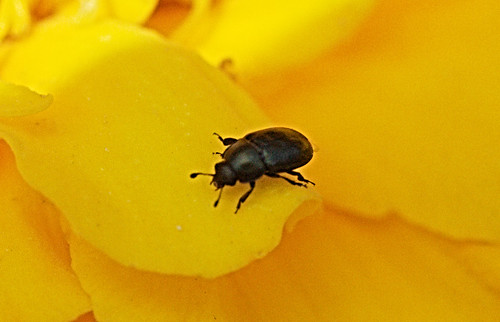
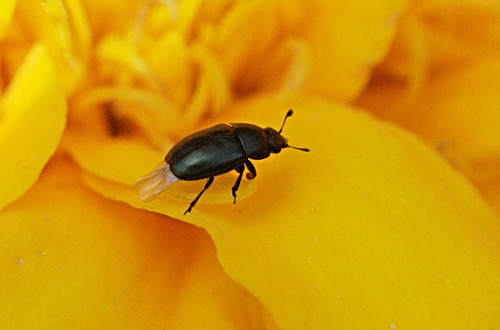
The next day I saw some of the same bugs investigating my yellow marigolds.
In spite of getting some closer shots I haven't yet managed to identify these 2mm long beetles which seem to ignore all other colours of flowers. These usually appear every year, normally around harvest time.
Many thanks to Adrian of Adrian's Images for identifying the Pollen Beetles.
It took a while to track down the identification of the tiny black beetles which arrived on the sunflowers in large numbers:
The pollen beetle, probably Meligethes aeneus, is particularly attracted to almost any yellow object and can be found on oil seed rape and sunflowers amongst others.